Decorative acoustic wall panels: felt, texture and placement
A decorative acoustic panel should belong in your interior and contribute to the way the room sounds. Start with the material and the space, then choose the colour, relief and arrangement that make the wall feel considered.
4 min read · Updated 1 October 2026
Key takeaways
- Look beyond the surface finish to the absorbing material
- Check acoustic evidence for the actual product and mounting
- Choose a layout that leaves the panel faces exposed
- Consider felt panels alongside curtains, rugs and furniture
How decorative panels absorb sound
Hard surfaces reflect much of the sound that reaches them. An absorbing panel takes in some of that energy instead. Adding suitable absorbing material can help when voices keep ringing around a room.
Appearance alone does not show how much sound a panel absorbs. Thickness, material, surface area and mounting all matter. Compare published measurements only when the test conditions and product configurations are clear.
Felt relief, printed art or timber slats?
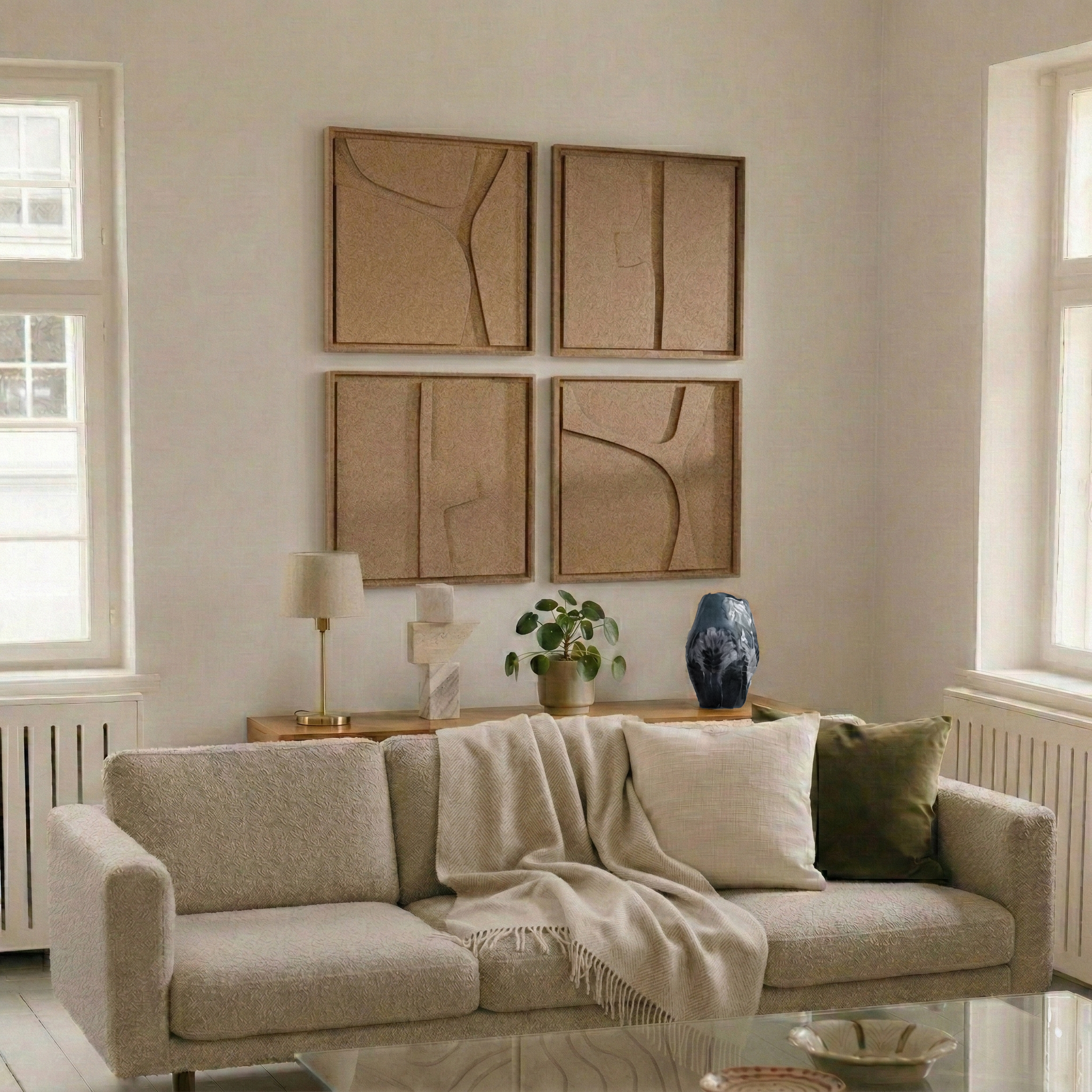
Felt relief makes colour and texture part of the artwork. Printed acoustic panels put a photographic or illustrated image on an acoustic construction. Timber slats create a repeated architectural pattern; the backing and full installation determine their acoustic contribution.
Choose the look that fits your room, then verify the relevant product specification. Different types cannot reliably be ranked by appearance or by a generic claim that one material always performs better.
What to expect from FeltArt
FeltArt panels are made from layered PET felt. The composition comes from the shapes and colours of the material. Each product is supplied as a set of two panels, with mounting materials and instructions.
Most designs offer S 60 × 60 cm, M 60 × 80 cm and L 70 × 110 cm per panel. Some designs have a more limited size range. Use the options on the individual product page when planning your wall.
Choose a composition for the room
Above a sofa, test the width of the two panels together before ordering. Near a dining table, consider what you see when seated as well as when entering the room. In a workspace, leave room for shelves, lighting and the desk.
Compare colours with the wall, floor and furniture in daylight and artificial light. Keep the felt surface open rather than placing it behind glass, covering it with fabric or painting it. Follow the care instructions for the actual product.
Match expectations to the problem
Decorative absorption can complement a furnished living room. Large open spaces, high ceilings and extensive glazing may need more treatment and individual acoustic advice.
Panels that absorb sound within the room do not provide sound insulation from neighbours or street traffic. Identifying that distinction before you buy helps you choose an appropriate solution.
Ready to act on your acoustics?
Start with a single panel on the most critical reflection wall. You'll hear the difference immediately.
Frequently asked questions — choosing decorative acoustic wall panels
Related guides
Read more guides4 min read
How to choose acoustic wall art
Choose acoustic wall art by material, size, colour and position. A practical guide to felt wall art and sound absorption in a furnished room.
Read guide
4 min read
How to reduce echo in a room
Reduce echo with a considered mix of soft furnishings and acoustic panels. Learn how to assess your room, choose positions and plan absorbing area.
Read guide
3 min read
Acoustic wall art or 3D felt panels?
Compare acoustic wall art by image, material, texture and flexibility. Choose between printed artwork, interchangeable frames and 3D felt panels.
Read guide