Choosing acoustic wall art for your living room
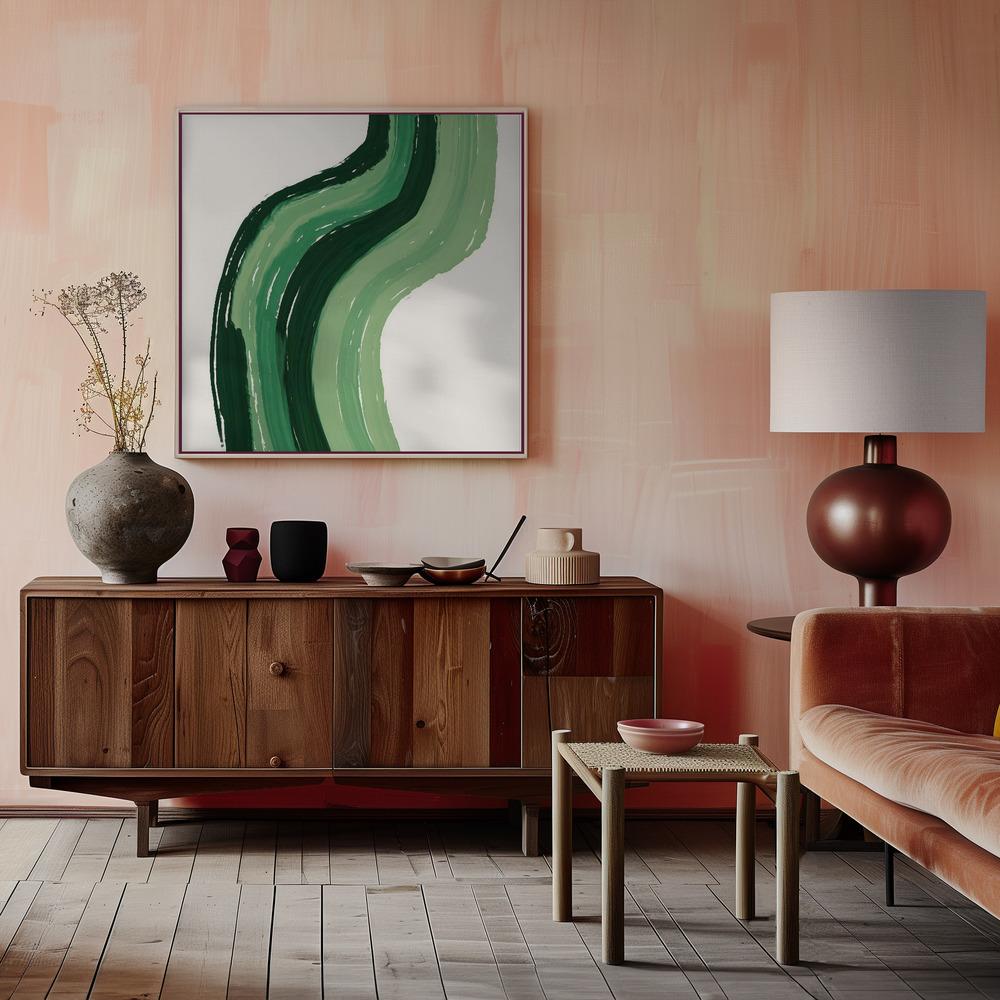
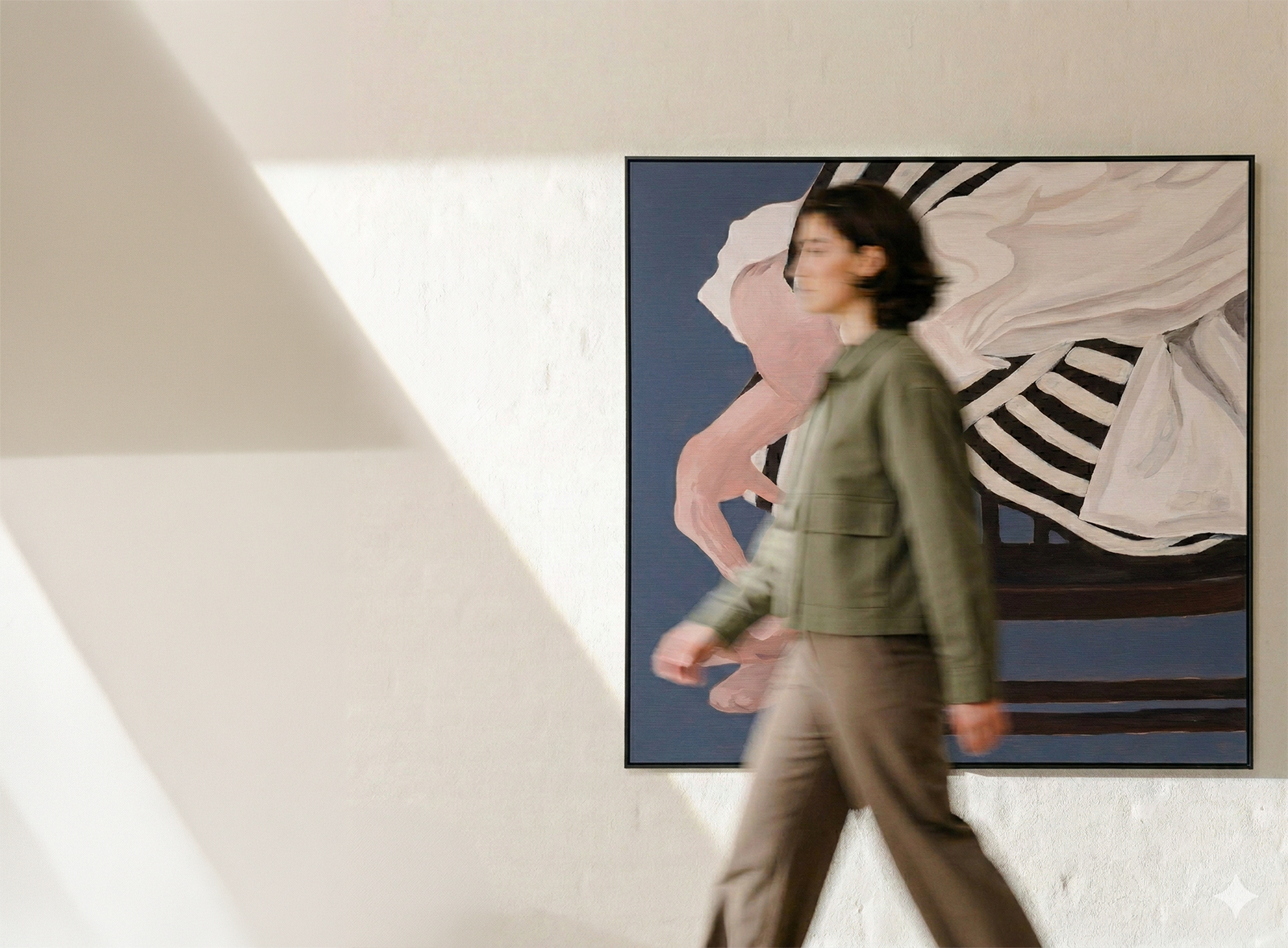
A conversation can linger in a room with bare walls, glass and a hard floor. Acoustic wall art introduces an absorbing surface while giving that wall a composition, colour and texture. The visual choice and the sound of the room deserve equal attention.
4 min read · Updated 1 October 2026
Key takeaways
- Choose a sound-absorbing material, not just an acoustic label
- Consider the size, surfaces and furniture in your room
- Plan the whole composition before choosing a format
- Sound absorption is different from soundproofing
What makes wall art acoustic?
Acoustic wall art contains material that absorbs part of the sound reaching it. It can reduce the reflections that contribute to reverberation, the sound that continues after someone has stopped speaking. Ordinary decorative art is not automatically an acoustic absorber.
Check what the product is made of and how it is built. If a supplier publishes acoustic measurements, look for the tested material, thickness and mounting arrangement. A result from a different product or installation does not establish what will happen in your room.
Choose between a printed image and felt relief
Printed acoustic artwork places an image at the centre of the design. FeltArt uses layers of coloured PET felt to form the artwork itself. Its relief catches the light differently as you move around the room.
Think about the colours you already see from the sofa or dining table. A quieter palette can sit alongside patterned furniture; a stronger colour can become a deliberate focal point. Neither approach determines acoustic performance on its own.
Plan size and position together
Measure the wall and mark out the proposed composition with removable tape. Leave space around the furniture and between the panels. For a set of two, consider both panels and the gap when judging the overall width.
Look for exposed, hard wall surfaces near the part of the room you use. A position hidden behind a tall cabinet gives sound less access to the absorber. Total exposed absorbing area matters, but so do the material, mounting and distribution. One large panel is not automatically better than several smaller panels with the same area.
Treat the room as a whole
Curtains, rugs and upholstered furniture can complement acoustic wall art. In a large or open-plan room, wall art alone may not provide all the absorption you need. Start with the areas where conversations or calls take place and review the result before adding more.
If the problem is noise entering from outside or through a party wall, investigate sound insulation. Absorbing panels inside the room do not replace construction that limits sound transmission.
Buying FeltArt for a British home
FeltArt is sold as a set of two panels. Available formats depend on the design: check the product page for S 60 × 60 cm, M 60 × 80 cm or L 70 × 110 cm per panel.
Delivery is available from the Netherlands to England, Scotland and Wales. Checkout is in euros. UK import VAT, any customs duty and clearance fees are payable separately on import. Read the delivery policy and the estimate at checkout before ordering.
Ready to act on your acoustics?
Start with a single panel on the most critical reflection wall. You'll hear the difference immediately.
Frequently asked questions — how to choose acoustic wall art
Related guides
Read more guides4 min read
Choosing decorative acoustic wall panels
Compare decorative acoustic wall panels by material, mounting and design. Discover how 3D felt panels combine wall art with sound absorption.
Read guide
4 min read
How to reduce echo in a room
Reduce echo with a considered mix of soft furnishings and acoustic panels. Learn how to assess your room, choose positions and plan absorbing area.
Read guide
3 min read
Acoustic wall art or 3D felt panels?
Compare acoustic wall art by image, material, texture and flexibility. Choose between printed artwork, interchangeable frames and 3D felt panels.
Read guide